
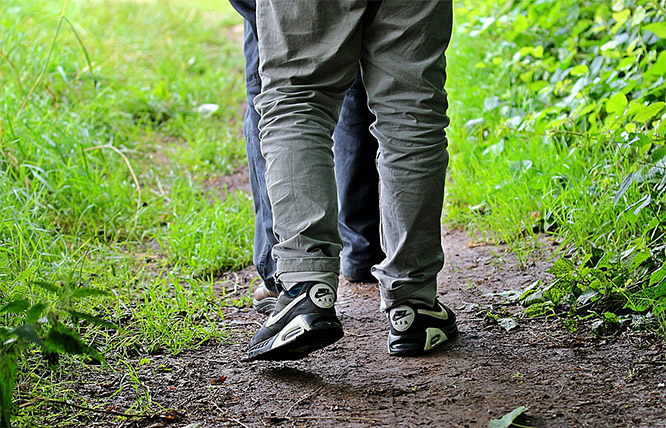
Walking gets dismissed as not real exercise constantly. That reputation is wrong, and the data is unambiguous. Thirty minutes of brisk walking five days a week produces clinically measurable changes in heart health, blood pressure, mood, and metabolic function — changes that take pharmaceutical intervention to replicate if you skip the movement entirely.
This is not medical advice.
How Walking Rewires Your Cardiovascular System
This is where the evidence is strongest, and the numbers deserve attention.
Brisk walking — roughly 3 to 4 mph, fast enough that you can talk but not sing — raises your heart rate into the aerobic zone: approximately 50 to 70 percent of maximum for most adults. That repeated stress, over weeks, forces your heart to pump more efficiently. Resting heart rate drops. Stroke volume increases. The left ventricle strengthens and handles each beat with less effort.
A 2019 study in JAMA Internal Medicine followed over 16,000 older women and found that those walking 4,400 steps per day had significantly lower mortality rates than women walking 2,700 steps. Benefits continued increasing up to about 7,500 steps, then plateaued. Four thousand steps is not an aggressive target. Most people who think they are sedentary are closer to 3,000.
Blood pressure responds faster than most people expect. Multiple randomized trials confirm that 150 minutes of moderate-intensity walking per week reduces systolic blood pressure by 3 to 5 mmHg on average. That looks small until you realize that for someone sitting in the prehypertensive range (120–129/80), that reduction often eliminates the conversation about starting medication.
HDL cholesterol — the kind that clears arterial plaque — rises by roughly 3 to 6 percent in previously inactive adults who begin a consistent walking program. LDL changes are modest without dietary changes, but the HDL improvement alone is worth noting given how hard it is to raise HDL through non-exercise interventions.
Walking and Blood Sugar: The Post-Meal Rule
A 2026 meta-analysis in Sports Medicine found that a 10-minute walk after meals reduces postprandial blood glucose by 12 to 22 percent compared to sitting. Three 10-minute post-meal walks outperform one 30-minute walk for blood sugar control specifically — same total time, meaningfully better glucose response. For anyone managing prediabetes or type 2 diabetes, that post-meal walk is one of the most effective non-pharmaceutical tools available.
What About Fat and Weight?
Walking burns approximately 80 to 100 calories per mile depending on body weight. A 170-pound person burns roughly 300 calories on a 3-mile walk. That alone will not overcome a poor diet, and pretending otherwise is how fitness content loses credibility. Where walking genuinely changes body composition is in visceral fat — the dangerous fat stored around internal organs. Regular walkers carry measurably less visceral fat than sedentary people at similar total body weights. That is a more meaningful health marker than the number on a scale.
Bottom Line: Walking 150 minutes per week produces measurable cardiovascular improvements. The blood sugar benefits from post-meal walking are among the most underused tools in metabolic health management.
The Mental Health Case for Walking, With Actual Numbers
Most people have heard that exercise improves mood. The mechanisms are more specific than that, and worth understanding.
- Cortisol reduction: A 20-minute walk in a natural environment reduces salivary cortisol by roughly 15 to 20 percent. Urban walking shows similar effects, slightly smaller. This is a measurable hormonal shift, not just subjective relaxation.
- BDNF production: Brain-derived neurotrophic factor supports neuron growth and connectivity. Aerobic exercise — brisk walking included — is one of the most reliable non-pharmaceutical ways to increase BDNF levels. Chronically low BDNF is a consistent biomarker in depression research.
- Anxiety symptoms: A 2026 meta-analysis in Depression and Anxiety found that aerobic exercise reduced anxiety symptoms with an effect size of 0.38. For mild to moderate anxiety, that is comparable to first-line medication effects — without the side effects or cost.
- Creativity and cognition: The Stanford study by Oppezzo and Schwartz (2014) showed that walking boosted divergent thinking output by approximately 81 percent compared to sitting. The effect persisted even when participants walked on a treadmill facing a blank wall. Movement drives the result, not scenery.
- Sleep onset: Morning walkers specifically show improved sleep latency — the time it takes to fall asleep. Light exposure in the morning helps anchor circadian rhythm. This is why a 20-minute outdoor walk before 9 AM works better than melatonin for mild insomnia in otherwise healthy adults.
- Depression: Multiple meta-analyses show walking reduces depressive symptoms with effect sizes comparable to antidepressants for mild to moderate depression. Walking is not a replacement for treatment. It is, however, a legitimate and evidence-backed component of it.
Green spaces add a layer that urban walking does not fully replicate. A King’s College London study found that time spent near trees or in parks was associated with a 50 percent lower likelihood of reporting poor mental health on a given day. If you have the option, take it.
Bottom Line: BDNF, cortisol, and sleep latency data are hard biology. Thirty minutes outside beats thirty minutes on a treadmill when mental health is the primary goal.
How Many Steps You Actually Need — The Real Numbers
The 10,000-step target is marketing. It originated from a Japanese pedometer brand’s 1965 promotional campaign, not clinical research. Here is what the evidence actually supports:
| Daily Steps | Approx. Daily Time | Primary Benefit Documented | Plateau? |
|---|---|---|---|
| 2,000–3,999 | 20–35 min | Lower mortality vs. fully sedentary baseline | No — more still helps |
| 4,000–5,999 | 35–55 min | Meaningful cardiovascular improvement | No plateau yet |
| 6,000–7,999 | 55–75 min | Significant reduction in all-cause mortality | Starts plateauing for adults 60+ |
| 8,000–10,000 | 75–100 min | Maximum documented cardiovascular protection | Yes — benefits plateau around 7,500–8,000 |
| 10,000+ | 100+ min | Minimal additional mortality benefit in most studies | Firmly plateaued for most adults |
The practical conclusion: 6,000 to 8,000 steps per day captures nearly everything walking delivers. The jump from 3,000 to 6,000 steps produces enormous benefit. The jump from 8,000 to 12,000 produces very little, according to the JAMA Network Open 2026 analysis of over 15,000 adults.
Pace Matters More Than Duration for Cardio Gains
Intensity determines cardiovascular benefit more than total time logged. Aim for 100 steps per minute as a rough gauge for brisk walking. Most people stroll at 80 to 90 steps per minute without thinking about it. Pushing to 110 to 120 steps per minute puts you in the aerobic zone where the real adaptations happen. A Garmin Forerunner 265 ($449) or a basic Fitbit Charge 6 ($159) both track step cadence automatically if you want data rather than guesswork.
Six Walking Mistakes That Limit Your Results
Most people do not walk incorrectly — they walk in ways that quietly cap what they would otherwise get from it.
- Wrong shoes for your gait. Walking in running shoes engineered for heel-striking when you are a midfoot striker creates knee and ankle stress that builds over months, not days. The Brooks Ghost 16 (~$140) handles neutral gaits cleanly. If you overpronate — feet rolling inward with each step — the ASICS Gel-Kayano 31 (~$160) provides the stability structure you need. A 15-minute free gait analysis at any specialty running store tells you which category you fall into.
- Walking the same route at the same pace every day. Your body adapts within four to six weeks of any new stimulus. After that, the calorie burn on your usual 20-minute route drops by roughly 15 to 20 percent compared to when you started. Add a five-minute hard-effort interval every mile, or find terrain with elevation change.
- Counting ambient steps as exercise. Pacing your apartment while on phone calls counts toward step totals but produces no meaningful cardiovascular or metabolic effect. The 150 minutes per week guideline means 150 minutes of moderate-intensity movement — not steps accumulated by fidgeting.
- Skipping the first five minutes. Cold tendons and fascia are significantly stiffer than warm ones. Starting at full pace on a cold morning or immediately after sitting for hours is the most reliable path to plantar fasciitis. Five minutes of easy walking before pushing pace is not optional recovery theater — it is injury prevention.
- Walking exclusively on flat pavement. A 3 to 5 percent incline increases calorie burn by 20 to 30 percent and engages the posterior chain — glutes, hamstrings, calves — in ways that flat walking barely touches. Trail walking adds balance and proprioception as a side effect. If outdoor terrain is not accessible, a treadmill incline of 3 percent is a reasonable substitute.
- Expecting visible results in two weeks. Cardiovascular adaptations take four to six weeks of consistent effort before they show up in resting heart rate or perceived exertion. Most people abandon the habit before that window closes. Mood improvements happen faster — sometimes within days — but fitness changes require patience that most wellness content deliberately avoids mentioning.
The shoe issue is where most consistent walkers quietly lose money. Cushioning compresses after 300 to 400 miles of use, and worn-out midsoles transmit impact that healthy ones absorb. Replacing shoes on schedule matters as much as the walking itself for long-term joint health.
Walking vs. Running: One Clear Answer for Most Adults
For most adults over 35 without competitive athletic goals, walking is the smarter long-term investment — and the injury data is why.
Running burns roughly twice as many calories per minute and improves VO2 max faster. If you are training for a 5K or a marathon, running is obviously necessary. Outside of that, the tradeoff is not close.
Running carries a 20 to 80 percent annual injury rate depending on the study population — knee problems, shin splints, stress fractures, IT band syndrome. Walking’s injury rate sits around 1 to 5 percent. Over five years, a walker who never misses a week due to injury outperforms a runner cycling through training and recovery. Consistency over years beats peak output during healthy windows.
The calorie difference also narrows when you compare distance rather than time. Walking three miles burns roughly 80 percent of what running three miles burns. That 20 percent gap is not worth an injury risk multiplied by ten for most non-competitive exercisers.
When Running Wins
Under 30 with healthy joints and a goal to improve VO2 max or run an event? Run. Running delivers the same mental health benefits as walking in less time, which genuinely matters for people with constrained schedules. The Strava app (free tier is sufficient for most uses) tracks pace, elevation, and route history for either activity.
The Hybrid Worth Knowing
Walk-run intervals — alternating two to three minutes of running with two to three minutes of walking — produce cardiovascular benefits close to continuous running while cutting injury risk substantially. Jeff Galloway’s run-walk method has solid research support and is massively underused by people who think they have to choose one or the other.
Bottom Line: Choose running for athletic goals. Choose walking for joint longevity, sustainable habit formation, and a thirty-year exercise practice that does not require injury cycles.
The One Thing That Determines Whether Walking Actually Works
Six thousand to eight thousand steps per day at a brisk pace, five or more days a week, captures nearly everything walking can deliver — improved cardiovascular markers, reduced anxiety, better blood sugar control, and a measurable reduction in all-cause mortality risk documented across multiple large population studies.
None of it matters if you do it for three weeks and stop.
The single most important takeaway: walking works not because it is intense, but because it is sustainable — and a habit maintained for decades will always outperform the one abandoned after the first missed week.
Medical Disclaimer: This content is for informational purposes only and does not constitute medical advice. Always consult a qualified healthcare professional before making health-related decisions.