
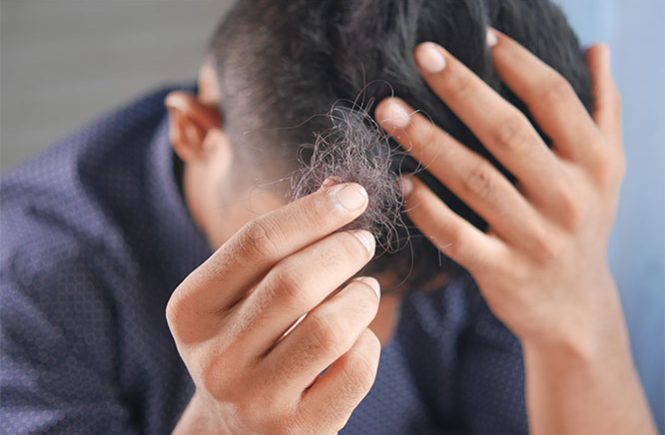
Three out of four men experience noticeable hair thinning by age 35. Women aren’t far behind — 40% of women over 40 report visible hair loss. The global hair loss treatment market hit $3.5 billion in 2026, fueled by endless promises from shampoos, supplements, and laser caps. Most of them deliver nothing.
This guide cuts through the marketing. You’ll get the actual data on what works, what doesn’t, and how to avoid spending $2,000 on a device that does less than a $30 bottle of minoxidil.
FDA-Approved Medications: The Two That Passed Clinical Trials
Only two drugs have FDA approval specifically for hair loss: minoxidil (Rogaine) and finasteride (Propecia). Every other product on the market — shampoos, gummies, serums — works on a best-effort basis with far weaker evidence.
Minoxidil (Rogaine) — The Topical Vasodilator
Approved in 1988. Minoxidil widens blood vessels in the scalp, delivering more oxygen and nutrients to hair follicles. It works for roughly 60% of users within 4-6 months. The catch: you must apply it twice daily, forever. Stop using it, and regrown hair sheds within 3-4 months.
Cost: $25-$40 per month (generic 5% foam). Name-brand Rogaine runs $45-$60. The 2% concentration for women costs about the same but shows slower results.
Side effects: Scalp irritation in 7% of users. Unwanted facial hair growth if the foam drips off your scalp. That’s it.
Finasteride (Propecia) — The DHT Blocker
Approved in 1997. Finasteride blocks the enzyme that converts testosterone into dihydrotestosterone (DHT), the hormone that shrinks hair follicles in genetic baldness. In 5-year studies, 83% of men maintained their hair count, and 66% experienced visible regrowth.
Cost: Generic finasteride runs $15-$30 per month. Name-brand Propecia costs $70-$100. Many insurance plans cover it as a preventive medication.
Side effects: Sexual dysfunction in 2-4% of users (reduced libido, erectile dysfunction). These effects are reversible upon stopping. The risk is real but lower than internet forums suggest — clinical trials show placebo groups report similar rates.
Verdict: For early-to-moderate male pattern baldness, finasteride is the most effective single treatment available. Women should not take it — it causes birth defects. Women should stick to minoxidil or spironolactone (off-label).
Low-Level Laser Therapy: Do Those $500 Laser Caps Actually Work?
Low-level laser therapy (LLLT) uses red light wavelengths (650nm-670nm) to stimulate mitochondrial activity in hair follicle cells. The theory is sound — light energy increases ATP production, which may wake up dormant follicles.
The FDA cleared LLLT devices as “safe and effective” for hair regrowth in 2007. But “cleared” isn’t “approved.” The FDA doesn’t require clinical trials for low-risk devices. The evidence is weaker than for medications.
The Data
A 2014 meta-analysis of 11 studies found LLLT increased hair density by an average of 17 hairs per square centimeter over 6 months. That’s modest — minoxidil typically delivers 20-30 hairs per square centimeter in the same timeframe.
Cost comparison:
| Device | Price | Diodes | Wavelength | Treatment Time |
|---|---|---|---|---|
| HairMax LaserBand 82 | $649 | 82 | 655nm | 90 seconds, 3x/week |
| iRestore Essential | $495 | 51 | 650nm/660nm | 25 minutes, 3x/week |
| CapillusPro 272 | $1,999 | 272 | 650nm | 6 minutes, daily |
| Theradome Pro LH40 | $895 | 80 | 678nm | 20 minutes, 2x/week |
Verdict: LLLT works as a supplement to medication, not a replacement. If you’re already on finasteride or minoxidil and want an extra 10-15% improvement, a device like the HairMax LaserBand 82 ($649) is worth considering. If you’re choosing between LLLT and medication alone, pick the medication. It’s cheaper and more effective.
Platelet-Rich Plasma (PRP) Therapy: The $1,500 Shot in the Dark
PRP therapy draws your blood, spins it in a centrifuge to concentrate the platelets, then injects that concentrate into your scalp. The idea: platelets release growth factors that stimulate follicle regeneration.
Studies show mixed results. A 2026 review of 11 randomized trials found PRP increased hair density by an average of 20-30 hairs per square centimeter — comparable to minoxidil. But the quality of evidence is low. Protocols vary wildly: some clinics use a single session, others require 3-6 sessions at $300-$500 each.
The real cost: Most clinics recommend 3 initial sessions spaced 4-6 weeks apart, then maintenance every 6-12 months. First year: $1,200-$2,500. Ongoing: $500-$1,000 annually.
Who it works for: PRP shows best results in people with early hair loss (Norwood-Hamilton scale stages 2-3). Advanced baldness (stages 5-7) sees little to no benefit. Women with diffuse thinning respond better than men with receding hairlines.
Failure mode: Many clinics charge for PRP without doing the proper centrifugation. A 2026 investigation found that 30% of clinics used machines that didn’t concentrate platelets enough to matter. Ask for the centrifuge model and platelet concentration numbers before paying.
Verdict: PRP is a legitimate option for early-stage hair loss if you have $1,500+ to spend and understand the odds. It’s not a miracle. For the same money, you could buy 5 years of finasteride and minoxidil combined, with better evidence supporting the outcome.
Supplements and Natural Options: The Billion-Dollar Placebo
The supplement industry sold $1.8 billion in hair loss products in 2026. Almost none have clinical evidence supporting their claims. Here’s what the data actually says.
Nutrafol — The Most Popular
Nutrafol Women ($88/month) and Nutrafol Men ($88/month) contain saw palmetto, ashwagandha, marine collagen, and various vitamins. The company published a 2026 study showing 73% of participants reported less shedding after 6 months. No placebo control group was used.
Cost: $88/month. No insurance coverage. No generic alternative.
Bottom line: Nutrafol may help with stress-related shedding or nutritional deficiencies. For genetic hair loss, it won’t outperform finasteride. At $1,056/year, you’re paying for convenience and marketing, not proven efficacy.
Biotin — The Most Overhyped
Biotin deficiency causes hair loss. But biotin deficiency is extremely rare — most people get enough from their diet. Supplementing extra biotin does not grow hair unless you were deficient in the first place. Blood tests show fewer than 1% of hair loss patients have low biotin levels.
Cost: $10-$20/month for 5,000mcg tablets. Cheap, but likely wasted money.
Saw Palmetto — The Herbal DHT Blocker
Saw palmetto is often called “natural finasteride.” It does inhibit 5-alpha-reductase, the same enzyme finasteride targets — but at roughly 1/100th the potency. Studies show minimal to no effect on hair regrowth.
Verdict: Skip the supplements unless a blood test shows a specific deficiency. Spend that $88/month on generic finasteride instead. You’ll get 10x the results for half the price.
Hair Transplant Surgery: The Only Permanent Solution
A hair transplant moves healthy follicles from the back and sides of your scalp (the “donor area”) to thinning or bald areas. Two techniques dominate: FUE (Follicular Unit Extraction) and FUT (Follicular Unit Transplantation).
FUE vs. FUT: What’s the Difference?
FUE: Individual follicles are extracted one by one using a 0.8-1.0mm punch tool. Recovery: 5-7 days. Scarring: Tiny dot scars, invisible at a #2 buzz cut. Cost: $4-$8 per graft. A typical session of 2,000 grafts runs $8,000-$16,000.
FUT: A strip of scalp is removed from the donor area, dissected into grafts under a microscope. Recovery: 2-3 weeks. Scarring: A linear scar across the back of the head. Cost: $3-$6 per graft. 2,000 grafts: $6,000-$12,000.
Which to choose? FUE is the standard for most patients today. The recovery is faster, the scarring is less visible, and the results look more natural. FUT is still useful for patients who need a very high number of grafts (4,000+) in a single session.
The Hard Truth About Transplants
Transplants don’t stop ongoing hair loss. If you’re 28 and get a transplant but don’t take finasteride, the non-transplanted hair behind and around the grafts will continue to thin. By age 45, you’ll have isolated patches of transplanted hair surrounded by bare scalp. That’s the “pluggy” look everyone fears.
Failure mode: Choosing a surgeon based on price. Cheap transplants ($2-$3/graft in Turkey or Mexico) carry higher risks of poor graft survival, unnatural hairlines, and infections. A botched transplant costs more to fix than a proper one costs upfront.
Verdict: Hair transplants are the only permanent option, but they require lifelong medication maintenance for natural-looking results. Budget $10,000-$20,000 for a reputable surgeon in the US. Don’t go overseas unless you’ve verified the clinic’s credentials through the International Society of Hair Restoration Surgery (ISHRS).
Common Mistakes That Cost You Time and Money
These four errors account for most failed hair loss efforts. Avoid them and you’ll save thousands.
1. Starting too late. Hair loss treatments preserve existing hair better than they regrow lost hair. The earlier you start, the more you keep. Waiting until you have a visible bald spot means you’ve already lost 50% of the hair in that area.
2. Using multiple products without a baseline. Starting minoxidil, a laser cap, and Nutrafol all at once means you won’t know which one is working. Try one intervention for 6 months. Measure results. Add another if needed.
3. Buying “hair growth” shampoos. Caffeine shampoos, ketoconazole shampoos, and biotin shampoos stay on your scalp for 60 seconds before rinsing. They cannot deliver enough active ingredient to affect hair follicles. The $40 bottle of “thickening” shampoo is just expensive soap.
4. Ignoring underlying medical causes. Thyroid disorders, iron deficiency, autoimmune conditions (alopecia areata), and stress (telogen effluvium) can all cause hair loss. A $100 blood test with your primary care doctor can rule these out before you spend anything on treatments that won’t help.
Hair loss treatment is a long game. The medications and devices that work do so gradually, over 6-12 months. The products that promise rapid results are the ones to avoid. Start with finasteride or minoxidil, measure your progress with monthly photos, and only add expensive interventions like PRP or laser therapy after you’ve established a baseline on medication.
The industry will keep inventing new $500 laser caps and $90-a-month supplements. The fundamentals won’t change: two FDA-approved drugs, one proven surgical option, and a lot of marketing noise around everything else.
Medical Disclaimer: This content is for informational purposes only and does not constitute medical advice. Always consult a qualified healthcare professional before making health-related decisions.